


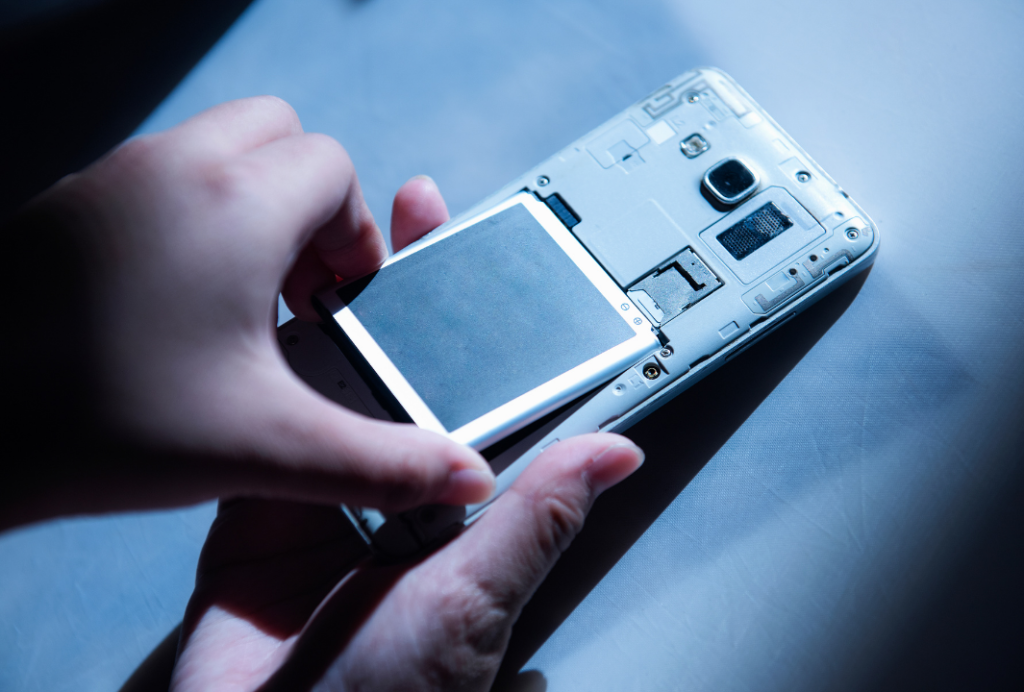
The EU Battery Regulation (EU) 2023/1542 requires that portable batteries incorporated in products be removable and replaceable. Article 11 sets out the conditions under which a battery is considered removable and replaceable, together with two derogation paths and a set of obligations that apply regardless of which path applies. Any product incorporating a portable battery and placed on the EU market on or after 18 February 2027 must comply with Article 11.
The general rule
Article 11(1) sets out the general rule: portable batteries incorporated in a product must be removable and replaceable by the end-user at any time during the lifetime of the product, using only commercially available tools, and without requiring proprietary tools, solvents, or thermal energy. The use of specialised tools is permitted only if they are provided free of charge with the product.
The definition of “commercially available tools”
The Commission’s guidelines (Notice C/2025/214) draw on the tool classification framework in EN 45554:2020, which is used in the context of assessing a product’s ability to be repaired, reused, and upgraded. That standard sets out four tool categories:
- Basic tools (including tools provided with the product as a spare part), or no tools
- Product-group specific tools
- Commercially available tools
- Proprietary tools
Per the guidelines, the concept of “commercially available tools” in Article 11 comprises categories (i) and (iii) — basic tools/no tools, and commercially available tools as defined in EN 45554:2020.
“Specialised tools,” as used in the Regulation, refers to product-group specific tools that are not available for purchase by the general public but are not protected by patents. Article 11 requires that any specialised tool needed to remove and replace a portable battery be provided free of charge with the product.
“Proprietary tools,” per EN 45554:2020, refers to tools not available for purchase by the general public, or for which applicable patents are not available for licence under fair, reasonable, and non-discriminatory terms. Such tools are not to be needed to remove portable batteries.
Two derogation paths
Article 11 sets out two categories of derogation from the general rule.
Partial derogation (Article 11(2)): by way of derogation from paragraph 1, the following products incorporating portable batteries may be designed so that the battery is removable and replaceable only by independent professionals rather than end-users:
- Appliances specifically designed to operate primarily in an environment regularly subject to splashing water, water streams, or water immersion, and intended to be washable or rinseable — but only where this derogation is required to ensure the safety of the user and the appliance.
- Professional medical imaging and radiotherapy devices, as defined in Regulation (EU) 2017/745, and in vitro diagnostic medical devices, as defined in Regulation (EU) 2017/746.
Full derogation (Article 11(3)): the obligations in paragraph 1 do not apply where continuity of power supply is necessary and a permanent connection between the product and the battery is required to ensure the safety of the user and the appliance, or, for products that collect and supply data as their main function, for data integrity reasons.
Obligations that apply regardless of which path applies
In addition to the removability and replaceability requirement, Article 11 establishes obligations that apply to all products regardless of which compliance path applies:
- The device must accept compatible (non-OEM) replacement batteries. A battery is considered compatible if it does not pose a risk to the user’s or the device’s safety, while allowing the device to operate as intended
- Batteries must be available as spare parts for at least five years after the last unit of the model is placed on the market.
- Clear replacement instructions must be provided to the end user, along with information on safe handling and proper disposal of waste batteries.
- No software may impede the replacement of the battery with a compatible one.
Webinar
We are running a free webinar on Article 11 of Regulation (EU) 2023/1542, covering the general rule, the partial and full derogation paths, and the related obligations under the Regulation.
👉 Reserve your seat here
